Read and transcribe beside the source.
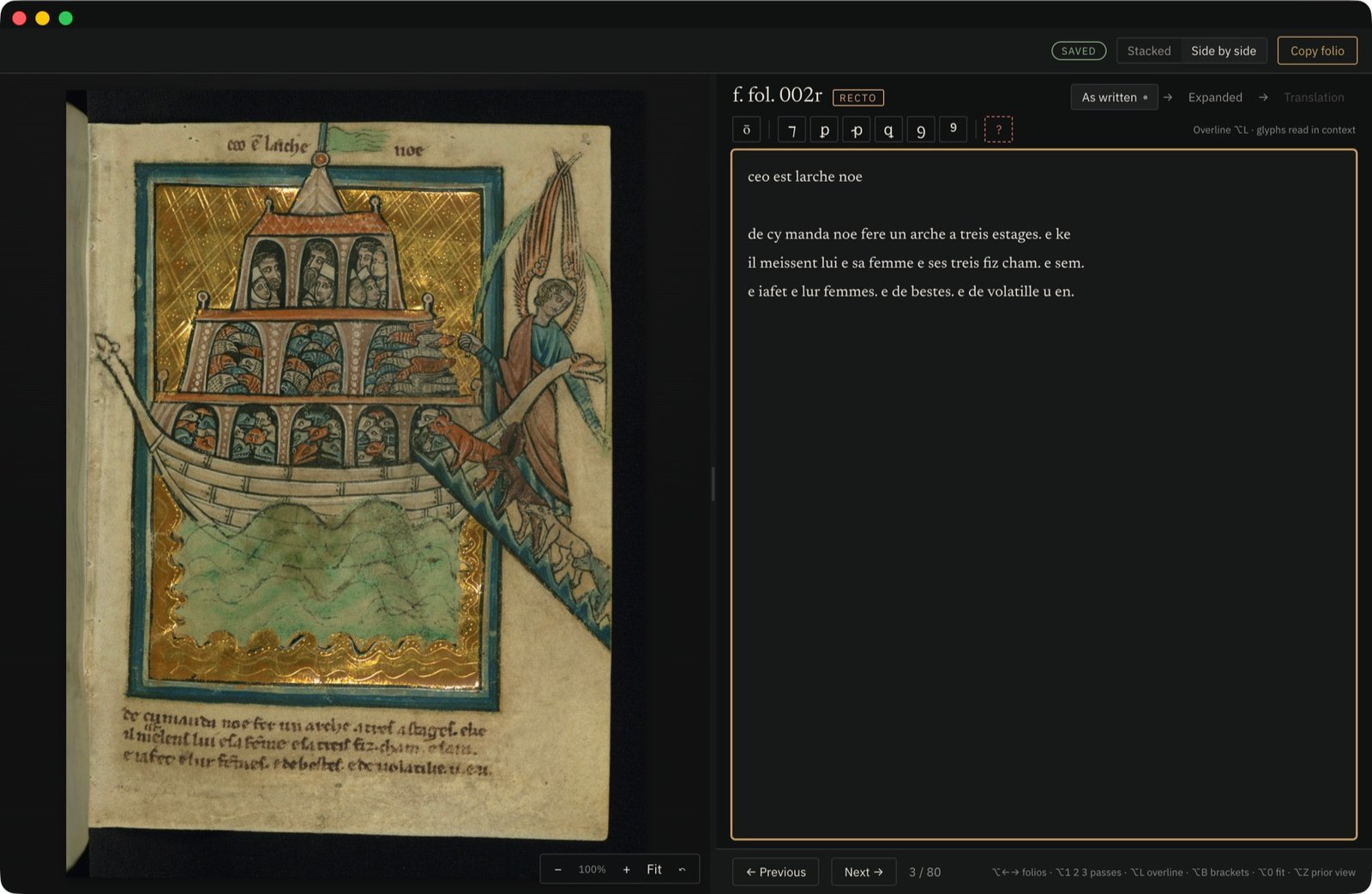
Work with the evidence inside a manuscript photograph without separating the reading from the page, region, or scholarly source it belongs to.
Make a difficult page more legible
Dark, faded, or uneven photographs often contain the evidence you need. Adjust the view while you read, using nondestructive changes that help you see without changing the source image you will ultimately cite.
Legibility
Adjust brightness, contrast, inversion, and other viewing settings for difficult pages.
Enhance without overwriting
Keep display adjustments as a working layer, so the original photograph remains available for comparison and citation.
Regions
Mark the line, margin, detail, or diagram that your note or transcription refers to.
Keep the evidence located
Return from a transcription or annotation to the precise page and region that prompted it.
Keep scholarly decisions visible
A transcription is more useful when its conventions and uncertainties travel with it. Record diplomatic text, expansions, translation, notes, tags, and source connections beside the image instead of flattening them into an unexplained block of text. When a word defeats you, mark the region and flag it with a label or tag; every unresolved reading stays findable on the page it came from.